Pages

Friday, October 10, 2014

The world's biggest sanitation programme


http://newnation.sg/wp-content/uploads/Indian-Sewer-man_1375125i1.jpeghttp://img.readitlater.com/i/globalsolutionspgh.org/wp-content/uploads/2014/07/india-river/RS/w800.jpg 


timesofindia.indiatimes.com October 10th, 2014


LONDON: The world's biggest sanitation programme, being run in India, will reduce the shameful practise of open defecation in the country but may not improve the country's abysmal health indicators, according to a study by an international group of scientists. 

The study comes at a time when Prime Minister Narendra Modi has launched the Swachh Bharat Abhiyan with great fanfare.Once covered toilets were made for families, the researchers looked at whether practising hygienic sanitation improved their health.


To everyone's surprise, the researchers found no evidence that the intervention protected against diarrhoea in children younger than 5 years: 7-day prevalence of reported diarrhoea was 8.8% in the intervention group (data from 1,919 children) and 9.1% in the control group (1,916 children).
Defecating in a toilet with water did not reduce the prevalence of parasitic worms that are transmitted via soil and can cause reduced physical growth and impaired cognitive function in children.

There was also no impact on child weight or height — measures of nutritional status.
Lead author of the study professor Thomas Clasen from Emory University, Atlanta and the London School of Hygiene and Tropical Medicine in the UK said, "Many householders do not always use the latrines. This, combined with continued exposure from poor hygiene, contaminated water, and unsafe disposal of child faeces, may explain the lack of a health impact".

More Indians have a cell phone than a covered toilet.


Around 626 million people in the country don't have access to a close toilet and consequently practice open defecation. The sanitation intervention delivered under the terms of the Government of India's Total Sanitation Campaign — the world's largest sanitation initiative — provided almost 25,000 individuals in rural India with access to a latrine.  (NDMC staff cleaning eco-friendly toilet near Valmiki colony.)

However, a study to be published in the British Medical Journal Lancet on Friday, involving 100 rural villages, shows that it did not reduce exposure to faecal pathogens or decrease the occurrence of diarrhoea, parasitic worm infections or child malnutrition.

This cluster randomised trial involved 9,480 households in 100 rural villages in Odisha with a child younger than four years or a pregnant woman.

Households in 50 villages were randomly assigned to receive the sanitation intervention in early 2011; control villages received the intervention after a 14-month surveillance period.
The intervention increased the average proportion of households in a village with a latrine from 9% to 63%, compared to an increase of 8% to 12% in control villages.

Worldwide, around 2.5 million people lack access to basic sanitation facilities such as a latrine, a third of who live in India. Two-thirds of the 1.1 billion people who practise open defecation and a quarter of the 1.5 million who die every year from diarrhoeal diseases caused by poor hygiene and sanitation also live in India.

Trying to explain why the intervention did not help bring down India's abysmally high diorrhea rates, the researchers suggest a number of possible explanations including insufficient coverage and inconsistent use of latrines, or that a lack of handwashing with soap or animal faeces could also be contributing to the disease burden.


Dr Stephen Luby, research deputy director at the Centre for Innovation in Global Health, Stanford University, said, "This rigorous assessment is important, because it provides the best evidence so far for the uncomfortable conclusion that well -funded, professionally delivered sanitation programmes, even when they reach coverage levels that are quite commendable for large scale interventions, do not necessarily improve health".

In 1990, households without any sanitation facility in India stood at 76%. To meet its Millenium Development Goals, India was required to reduce the proportion of households having no access to improved sanitation to 38% by 2015. The government had earlier estimated that India may reduce the proportion of households without any sanitation to about 43% by 2015 missing the target by about 5 percentage points. By 2015, India is likely to reduce the rural proportion of no sanitation to 58.8% (against target of 46.6%) and urban proportion of no sanitation to 11.6% (against target of 12.1%).

The UN had recently said that the number of people forced to resort to open defecation remains a widespread health hazard and a global scandal. "In 11 countries, a majority of the population still practices open defecation. Even in countries with rapidly growing economies, large numbers of people still must resort to this practice — 626 million in India, 14 million in China and 7 million in Brazil," a UN MDG report said recently.

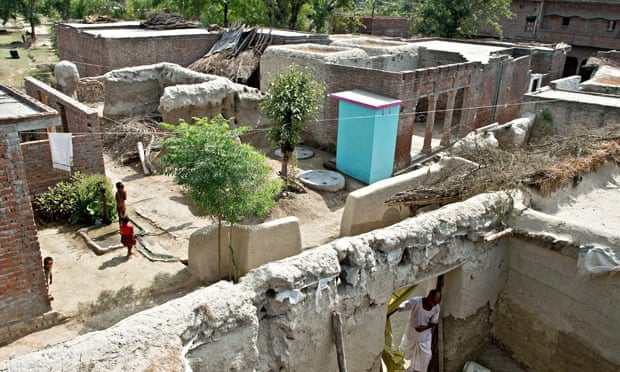
Better toilets may not mean better health


timesofindia.indiatimes.com October 10th, 2014


LONDON: The world's biggest sanitation programme, being run in India, will reduce the shameful practise of open defecation in the country but may not improve the country's abysmal health indicators, according to a study by an international group of scientists.

The study comes at a time when Prime Minister Narendra Modi has launched the Swachh Bharat Abhiyan with great fanfare.

Once covered toilets were made for families, the researchers looked at whether practising hygienic sanitation improved their health.

To everyone's surprise, the researchers found no evidence that the intervention protected against diarrhoea in children younger than 5 years: 7-day prevalence of reported diarrhoea was 8.8% in the intervention group (data from 1,919 children) and 9.1% in the control group (1,916 children).
Defecating in a toilet with water did not reduce the prevalence of parasitic worms that are transmitted via soil and can cause reduced physical growth and impaired cognitive function in children.

There was also no impact on child weight or height — measures of nutritional status.
Lead author of the study professor Thomas Clasen from Emory University, Atlanta and the London School of Hygiene and Tropical Medicine in the UK said, "Many householders do not always use the latrines. This, combined with continued exposure from poor hygiene, contaminated water, and unsafe disposal of child faeces, may explain the lack of a health impact".

More Indians have a cell phone than a covered toilet.

Around 626 million people in the country don't have access to a close toilet and consequently practice open defecation. The sanitation intervention delivered under the terms of the Government of India's Total Sanitation Campaign — the world's largest sanitation initiative — provided almost 25,000 individuals in rural India with access to a latrine.  (NDMC staff cleaning eco-friendly toilet near Valmiki colony.)

However, a study to be published in the British Medical Journal Lancet on Friday, involving 100 rural villages, shows that it did not reduce exposure to faecal pathogens or decrease the occurrence of diarrhoea, parasitic worm infections or child malnutrition.

This cluster randomised trial involved 9,480 households in 100 rural villages in Odisha with a child younger than four years or a pregnant woman.

Households in 50 villages were randomly assigned to receive the sanitation intervention in early 2011; control villages received the intervention after a 14-month surveillance period.
The intervention increased the average proportion of households in a village with a latrine from 9% to 63%, compared to an increase of 8% to 12% in control villages.

Worldwide, around 2.5 million people lack access to basic sanitation facilities such as a latrine, a third of who live in India. Two-thirds of the 1.1 billion people who practise open defecation and a quarter of the 1.5 million who die every year from diarrhoeal diseases caused by poor hygiene and sanitation also live in India.

Trying to explain why the intervention did not help bring down India's abysmally high diorrhea rates, the researchers suggest a number of possible explanations including insufficient coverage and inconsistent use of latrines, or that a lack of handwashing with soap or animal faeces could also be contributing to the disease burden.

Dr Stephen Luby, research deputy director at the Centre for Innovation in Global Health, Stanford University, said, "This rigorous assessment is important, because it provides the best evidence so far for the uncomfortable conclusion that well -funded, professionally delivered sanitation programmes, even when they reach coverage levels that are quite commendable for large scale interventions, do not necessarily improve health".

In 1990, households without any sanitation facility in India stood at 76%. To meet its Millenium Development Goals, India was required to reduce the proportion of households having no access to improved sanitation to 38% by 2015. The government had earlier estimated that India may reduce the proportion of households without any sanitation to about 43% by 2015 missing the target by about 5 percentage points. By 2015, India is likely to reduce the rural proportion of no sanitation to 58.8% (against target of 46.6%) and urban proportion of no sanitation to 11.6% (against target of 12.1%).

The UN had recently said that the number of people forced to resort to open defecation remains a widespread health hazard and a global scandal. "In 11 countries, a majority of the population still practices open defecation. Even in countries with rapidly growing economies, large numbers of people still must resort to this practice — 626 million in India, 14 million in China and 7 million in Brazil," a UN MDG report said recently.

Wednesday, October 8, 2014

Global development


B Kounteya Sinha,TNN | Oct 10, 2014,  Nitya Jacob, www.theguardian.com   October 8th, 2014


A toilet provided by the NGO Sulabh International in Katra Shahadatganj, where two teenage girls were murdered when they went to relieve themselves in the fields. Photograph: Prakash Singh/AFP/Getty Images Photo by: Photograph: Prakash Singh/AFP/Getty Images

From being the humble recipient of human waste, the toilet has reached the exalted status of being the subject of speeches by India’s Narendra Modi. The prime minister promised to put a toilet in every home by 2019 in his independence day speech in August, and recently reaffirmed a government target to build 5.2m lavatories in the first 100 days of his tenure.

The ministry of drinking water and sanitation has put its money where Modi’s mouth is by substantially raising subsidies for building toilets. Government subsidies for household loos have risen by almost 50%. The amount set aside for community toilets has trebled. There’s more funding for them in schools and health centres, too.

But do these figures add up? The logic behind the increases is that previous allocations were too small to make toilets that would last. Government subsidies equivalent to £5-12 per household often produced loos that quickly went out of use. Ministry figures show that 77% of households living below the poverty line –those who qualify for government subsidies – have toilets. But as many as four out of 10 of those are thought to be out of order.

These disappointing figures hide a deeper problem.

Over the years, the government has released grant money to build toilets to just under 85% of households living in poverty. But only 40% of those lavatories exist today. So about 35m toilets that were paid for, at least in part, by the government simply do not exist now.

A major fault in the programme lies with the people who are supposed to benefit. Defecating in the open is an unfortunate fact of life for many people in India. An estimated 620 million people – about half of the population – defecate in the open every day.

Yet, using government figures, 490 million people in rural India, of the total rural population of 888 million, have toilets. This implies that there are millions of people defecating in the open despite supposedly having access to a loo.

There is an explanation for this. Studies from different parts of India indicate that the use of toilets, even where they do exist, is low (pdf), at about 35%. That means only about 220 million people in rural India actually use their toilets. Another 270 million do not.

Why is this happening? Part of the problem is the poor quality of the toilets. But another part is the previous programme’s fundamental flaw: only small amounts of money were allocated to promote better hygiene and trigger a change in behaviour. It began as a demand-led campaign, teaching people about the hazards of open defecation, so that they would then presumably demand toilets. But it has become driven by achieving numbers, rather than ensuring that the loos are used.

Modi’s new campaign to end open defecation in the next five years does not address this systemic flaw. This ambitious campaign sets a target of 17m toilets a year for the next five years. But funding for education in hygiene and behavioural change remains a small fraction of the total amount. The danger is this, too, will be driven purely by numbers.

It takes six to eight months to convince a village of the need and usefulness of toilets, according to a study by the World Bank. It takes a lot of time and resources, but leads to better construction and much higher levels of use. Focusing on the importance of hygiene before, during and after the construction of toilets can take a community from realising why they need toilets to demanding and using them.

Most people are aware of subsidies for building toilets and will comply with the letter of the scheme. However, they may not comply with its spirit and fail to use the toilets.

In its current form, this ambitious new attempt to end open defecation may spend the equivalent of £1.6m over five years to create even more unused or ineffective toilets. ( Nitya Jacob is the head of policy at WaterAid India)

Sunday, October 5, 2014

Modi’s ‘cleaner’message inspires Muslim youth

  • By Staff Reporter, www.thehindu.com  October 5th, 2014
Members of Vizag Young Muslim Association plan to participate in Prime Minister Narendra Modi’s campaign ‘Swachh Bharat Abhiyan’ by celebrating Bakrid festival in a greener way.

The association with 30,000 members plans to spread awareness among the community to take care about the disposal of the ‘offal’ after the conventional animal sacrifice during the festival.

Talking to mediapersons about the efforts being taken to participate in the Swachh Bharat Abhiyan, association president Mohammed Sadiq said: “By partnering with GVMC, we have facilitated extra dustbins in every ward for use by our community members. Other than the daily maintenance, the GVMC officials have agreed to collect debris twice a day and carry out intensive fogging operations in all the specified wards to control mosquito menace, a week ahead of the festival.”

Wards 2, 3, 13, 21, 23-25, 29, 31, 34 and 40 are some of the areas identified for the fogging operations.

Association honorary president M. A. Rasool said that it was imperative to educate children and parents on keeping their environs clean and stick to greener practices forever. “With this year’s Bakrid festival, we want to set a new trend. A host of sanitary inspectors and association members will work as a team to help maintain cleanliness across the city and do our bit for Swachh Bharat Abhiyan,” he added.

Thursday, October 2, 2014

Toilet Humour

Instructions on using a squat toilet
Urinating against a movie poster

Roadside Urinal

Is Swachhata only about litter?


By Ruhi Saith, www.thehindu.com   October 2nd, 2014

WIDENING SCOPE: “While Swachh Bharat Abhiyaan Photo by: SBA The Hindu

The programme needs to retain the momentum of a movement than that of a litter-cleaning project

“Slum districts... consisted of poorly built houses, a deficiency of ventilation and toilets, unpaved narrow streets, mud, and stomach-turning stenches due to the presence of decaying refuse and sewerage. In such conditions, ill health was observably endemic.”

This is not a description of Indian cities today (though it may well be), but of Britain around 150 years ago, prior to Britain’s sanitary reform movement, by Dr. James Kay-Shuttleworth. The movement that began in Britain and then spread to other industrialised countries like the United States was spurred in London by Edwin Chadwick’s report “Inquiry into the Sanitary Conditions of the Laboring Populations of Great Britain”. The sweeping changes it brought about in the industrialised world are believed to have saved many lives and contributed to increases in life expectancy — much more than advances in medicine like antibiotics and vaccination.


A momentous opportunity
Given rapid urbanisation and similar conditions today in our cities and towns, Swachh Bharat Abhiyaan is a programme whose time has indeed come. It is a momentous opportunity that has opened up a policy window (having caught the attention of the media, legislators and the public), especially at a time when a new health policy is being framed. At present, the focus of Swachh Bharat Abhiyaan seems to be on exhorting individuals not to litter.

But the programme needs to retain the momentum of a movement rather than a litter-cleaning project. Besides, Purna Swachhata is not just about litter. As Professor A.K. Gosain, Professor of Civil Engineering at IIT Delhi, who is working on issues of urban sanitation, says, Purna Swachh requires three things to be addressed. The first is sewerage or wet waste generated from bathrooms, for which we need a proper system of sewers and sewerage treatment plants; the second is storm drainage or rain water, for which water tables need to be recharged through natural and man-made water drains which remain dry during the monsoons; and the third is solid waste which needs to be dealt with through landfill, incineration, and so on. Given the range of tasks that need to be undertaken, just sweeping litter from the roads under the carpet is not going to solve much.

Action is needed to increase knowledge, change attitudes and transform practice. While an excellent start has been made by targeting attitudes, synchronous action on other fronts is needed to ensure progression from one step to the other.

There are gaps in knowledge and so we need to ask the following questions: Has the Swachh Bharat Abhiyaan instituted campaigns to make people aware of the links between cleanliness and health? Is there going to be a campaign to increase citizen awareness of their rights to healthy and clean environments? This could then translate into demands of municipal authorities to deliver on their responsibilities.

(Read Post: Will the new broom sweep clean?)

In the context of promoting practice, we could well ask of the SBA campaign: When are dustbins, clean public toilets, functional sewers and adequate sewage treatment plants going to be provided? For instance, in Delhi, only around 30 per cent of the sewage is treated, with the remaining either flowing into the Yamuna or seeping into the ground and contaminating our drinking water. Also, are there any plans to ensure the presence of motivated municipal staff (with protection to their health and dignity), to undertake tasks related to keeping bins empty, storm drains dry and clear, and sewers unblocked and functional?

Lessons from Britain
Besides, action at the level of individuals is clearly not enough. Sanitised and clean public spaces are a public good and have to, by definition, be provided by the state. It is worthwhile reflecting on the broad swathe of interventions, including pieces of legislation, which accompanied sanitary reform in Britain and other industrialising countries about 150 years ago. First, the sanitary movement involved linking cleanliness with sanitation and water supply — one cannot happen without the other. Second, it established the inescapable links between public health and sanitation in the form of a Public Health Act, initiating the idea of public health districts with sanitary inspectors and public health officers. (It is important to note that the only State in India that separates public health from medical departments is Tamil Nadu.) Third, it made municipal authorities responsible not just for cleanliness, but for health (given the necessity of one for the other) in cities, with a gradual transition from permissive to compulsory legislation.

It is also important to realise that all these changes took place over a century or so. We cannot wait that long, but the good news is that we are well down the road to reform, beginning from a much later point. A Swachh Bharat is however not going to be achieved by 2019 by focussing solely on citizen participation in clearing litter. This is a start, but it is going to require appropriate budget allocations, which reduced government expenditure on health care and higher growth due to a healthy labour force would more than make up for. It is also going to require multi-sectoral, well-planned and well-executed policies. Exhorting individuals needs to be accompanied by extensive action if the goal of a clean and healthy India is to be realised in our lifetime.

(Dr. Ruhi Saith is a public health expert and is currently working as a senior consultant in public health at Oxford Policy Management. She is also the Developing Countries Editorial Consultant with the Cochrane Public Health Group.)